
Understanding and Managing Emotional Dysregulation
Emotional dysregulation is the real difficulty in managing and responding to your emotions in a healthy way.
It is common, and you are not the problem. Your system just needs a bit more support.
The signs are things you might have noticed. Intense mood swings. Feeling emotions very strongly, so much so that you react quickly without thinking. Trouble calming down. Feeling overwhelmed easily. Emotional exhaustion. Strained relationships.
It often happens for clear reasons, like a nervous system that is consistently overwhelmed. Past trauma, stress, or existing mental health conditions play a big role. It can also be down to a lack of practical coping skills, or even simple genetics.
Here are specific coping strategies you can try right now.
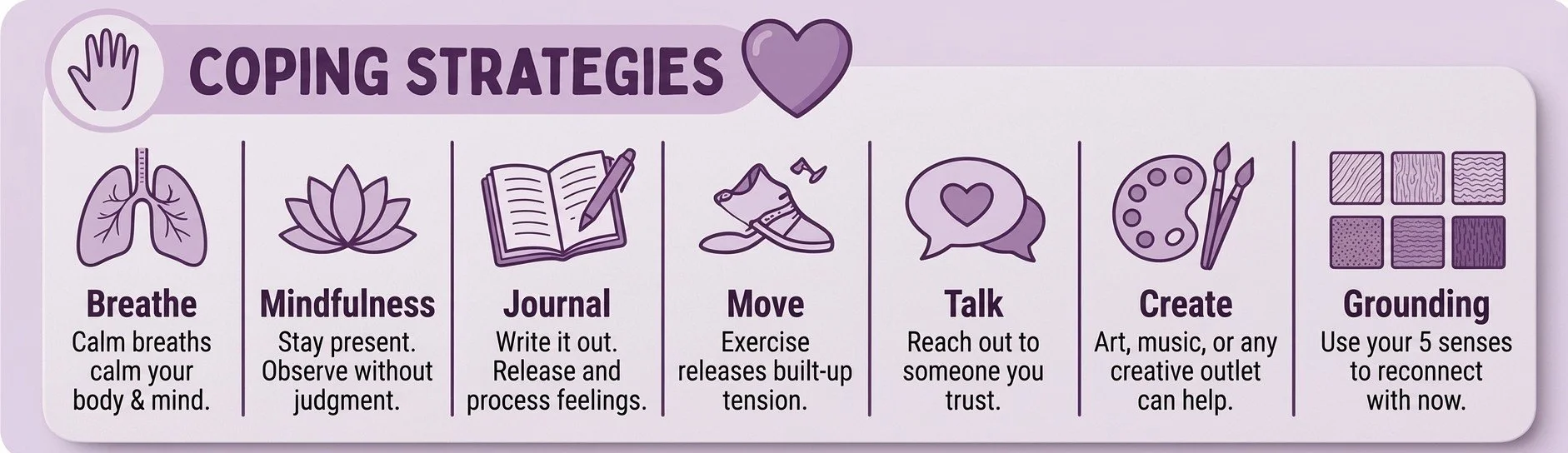
Breathe. Slow, deep breaths calm your body and mind quickly.
Mindfulness. Stay present and observe your thoughts without judgement.
Journal. Write your feelings on paper to release and process them.
Move. Physical exercise releases built-up physical tension.
Talk. Reach out and connect with a person you trust.
Create. Any creative outlet like art or music can help.
Ground. Focus on your five senses to pull your mind back to the present.
You can build better habits over time. Practice validating your feelings. Try not to suppress them. Express your emotions in healthy ways. Acknowledge them. Build a daily self-care routine that covers your basic needs: good sleep, regular meals, and staying hydrated. Setting clear boundaries helps protect your energy.
Remember, emotions are not the enemy. Dysregulation is simply a sign that your nervous system needs support. Be kind to yourself as you figure it out. Recovery is a steady process, not a race.
